

Civilian Protections in Modern Urban Warfare: Evaluating Protocol I Compliance
Humanity Beneath the Concrete
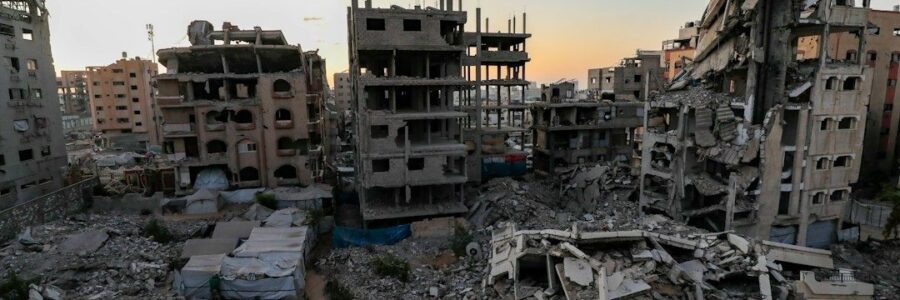
International humanitarian law can appear distant from the realities of a damaged apartment block, a hospital without electricity, or a neighbourhood waiting for clean water. Yet Additional Protocol I to the Geneva Conventions is designed to address precisely these realities. Its rules on distinction, proportionality, and precaution are not merely technical standards for military lawyers. Applied properly, they are safeguards for people whose homes, services, livelihoods, and support networks may be caught in the path of hostilities.
That practical translation matters because modern warfare increasingly takes place in dense municipal zones. Civilians, fighters, hospitals, schools, power stations, transport routes, and communications systems may exist within the same built environment. A single strike can therefore produce effects far beyond the point of impact. When a substation fails, water pumps may stop. When fuel deliveries are blocked, ambulances, sewage systems, and hospital generators may become unreliable. When skilled maintenance workers cannot safely reach equipment, an apparently repairable system may remain unusable for weeks or months.
This article treats Protocol I as a living protective framework, measured through civilian survival rather than legal language alone. It explains the core rules in accessible terms, shows why urban life-support systems must be assessed as interconnected networks, examines reverberating harm, and offers a documentation method for community monitors. The goal is not to replace legal analysis, but to help advocates record what happened clearly, safely, and in a form that can support accountability.
Core Principles of Additional Protocol I in Everyday Terms
Three principles provide the foundation. Distinction requires parties to separate civilians and civilian objects from combatants and military objectives. Proportionality prohibits an attack expected to cause civilian harm excessive in relation to the concrete and direct military advantage anticipated. Precaution requires feasible steps to verify targets, choose methods that reduce civilian harm, provide warnings where circumstances permit, and cancel or suspend an attack if the expected harm becomes excessive.
Urban density changes the practical meaning of each rule. In an open area, a military objective may be physically separated from homes and public services. In a city, the same objective may be beside a market, beneath a residential building, or connected to systems serving hundreds of thousands of people. The existence of a military presence does not make every nearby object targetable. Under Article 52(2) of Protocol I, an object must effectively contribute to military action and its destruction, capture, or neutralization must offer a definite military advantage in the circumstances at the time. Infrastructure cannot lawfully be treated as one undifferentiated target simply because parts of a network may support military activity.
For community advocates, the legal principles become easier to apply when translated into questions about information, alternatives, and foreseeable consequences. The ICRC explains that commanders must obtain and continually update information about population patterns, protected sites, buildings, infrastructure, and civilian activity. Uncertainty does not create unlimited freedom to attack. It should prompt further verification, more cautious methods, or a decision to postpone an operation where feasible. This is also connected to the local governance ideal described in the Human Rights City approach, which places individuals at the centre of local decision-making and the protection of fundamental rights.
| Legal principle | Community-centred meaning |
|---|---|
| Distinction | Identify the specific military objective and do not treat an entire neighbourhood or utility network as one target. |
| Proportionality | Assess foreseeable civilian deaths, injuries, displacement, service failures, and other harm against the specific military advantage expected. |
| Precaution | Gather reliable information, consider safer options, warn when possible, and stop an attack if circumstances change. |
| Constant care | Protect civilians throughout planning and operations, not only at the moment a weapon is released. |
This reframing highlights the commander”s affirmative duty. Verification is not a formality completed once and then forgotten. Population movements, hospital locations, weather, damage to buildings, and the status of a target can change rapidly. A responsible process therefore involves repeated information gathering, challenge to assumptions, and review of available weapons and tactics. For monitors, evidence of whether these steps were possible and whether they were taken can be as important as evidence of the physical damage itself.
The Vital Interdependence of Urban Life Support Systems
Urban survival depends on chains rather than isolated objects. Electricity may power water treatment, pumping, refrigeration, sewage removal, telecommunications, elevators, hospital equipment, and fuel distribution. Clean water is necessary for hospitals and infection control, while sanitation prevents disease in shelters and crowded neighbourhoods. Telecommunications allow residents to request assistance, coordinate evacuation, and receive warnings. Damage to one link can weaken the whole system.
These systems also depend on people. Engineers, electricians, water technicians, sanitation crews, dispatchers, fuel workers, and repair contractors may be civilians, but their work can expose them to crossfire, explosive remnants, checkpoints, damaged roads, or armed actors occupying facilities. The ICRC has emphasized that essential services rest on three connected components: personnel, hardware, and consumables. A functioning pump is not enough if no trained worker can reach it, and a qualified technician cannot restore service without spare parts, fuel, chemicals, or safe access.
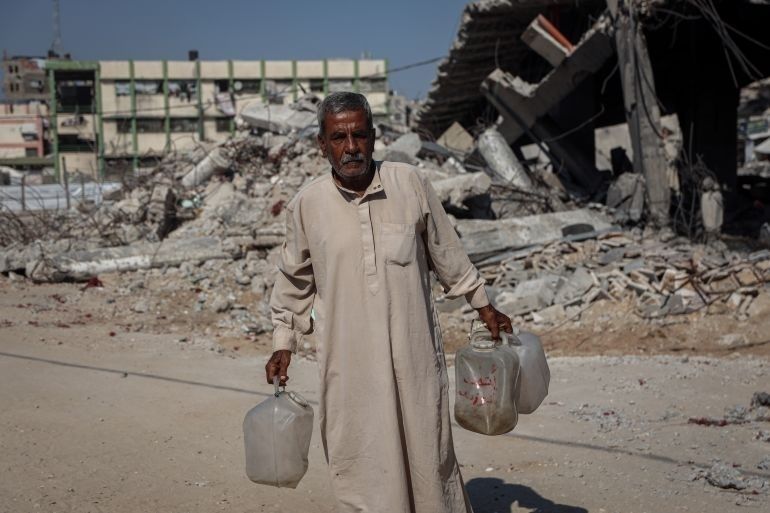
The consequences can appear first in places that are already under pressure. A hospital intensive care unit may have generators, but fuel shortages, failed cooling equipment, interrupted oxygen supplies, or broken communications can still threaten patients. Public health risks may rise when sewage treatment stops, waste collection is suspended, or people must rely on contaminated sources. The United Nations Security Council has also recognized the importance of protecting civilian infrastructure and essential services in conflict, as reflected in this Authoritative Source.
A community baseline should identify systems that require affirmative safeguarding:
- Electricity generation, substations, distribution lines, backup generators, and fuel storage.
- Water treatment plants, wells, pumping stations, reservoirs, pipelines, and water-truck access points.
- Sewage treatment, drainage, solid-waste collection, and sanitation facilities.
- Hospitals, clinics, pharmacies, laboratories, blood banks, oxygen systems, and ambulance dispatch.
- Telecommunications, emergency call centres, radio networks, and public warning systems.
- Food storage, refrigeration, markets, bakeries, and distribution routes.
- Skilled personnel, spare parts, fuel, treatment chemicals, and other essential consumables.
Understanding Reverberating Harm Beyond the Initial Blast
Immediate kinetic damage is the harm visible at the moment of an explosion: deaths, injuries, collapsed buildings, fires, and damaged roads. Reverberating harm is what follows as systems fail or become inaccessible. It may include untreated illness, preventable deaths, waterborne disease, loss of income, school interruption, food price increases, displacement, and long-term psychological distress. These effects are not necessarily separate from the attack. They may be foreseeable consequences of damaging a system on which civilian life depends.
The Hawija airstrike illustrates why documentation must extend beyond the crater. On 2 and 3 June 2015, a Dutch F-16 strike on an alleged ISIS bomb factory triggered a large secondary explosion. Research published in the Leiden Journal of International Law describes estimates of between 70 and at least 85 civilian deaths, extensive damage to homes and businesses, and disruption to water, electricity, health, emergency-response, and education infrastructure. The analysis also records later effects such as unemployment, debt, displacement, inadequate shelter, psychological harm, gender-based violence, and interrupted education. It does not itself determine the strike”s legality, but it demonstrates the importance of tracing effects over time.
Heavy explosive weapons are especially dangerous in populated areas because their blast, fragmentation, fire, and structural effects can extend beyond the intended point of impact. Hospitals may be damaged directly or become unreachable because roads are blocked. Medical personnel may flee, supplies may spoil without refrigeration, and residents may delay seeking care because travel is unsafe. The ICRC describes these consequences as interconnected, immediate and long-term, visible and hidden, while emphasizing that they are not an inevitable feature of warfare.
| Time frame | Examples of harm to document |
|---|---|
| Immediate | Deaths, injuries, collapse, fires, blast damage, blocked roads, and damage to civilian objects. |
| First days | Power loss, water interruption, hospital overload, disrupted communications, evacuation, and shortages. |
| Weeks and months | Disease, untreated injuries, unemployment, rising prices, school closures, displacement, and repair delays. |
| Long term | Loss of skilled workers, prolonged homelessness, trauma, interrupted education, unexploded ordnance, and weakened development. |
The legal assessment still concerns the circumstances known or reasonably foreseeable at the time of the attack, not every later misfortune. That makes careful chronology essential. A monitor should distinguish confirmed facts from informed estimates, record what information was available before the incident, and avoid claiming that every later consequence was caused by one event. Precision strengthens credibility.
A Practical Documentation Framework for Community Monitors
Documentation should be planned around safety first. A monitor is not required to enter a damaged site, approach unexploded ordnance, identify military positions, or expose a survivor to questioning that could create retaliation. Remote interviews, publicly available records, service-provider logs, photographs taken from safe locations, and anonymized testimonies may provide valuable evidence. Consent should be informed, voluntary, and capable of being withdrawn. Sensitive names, medical details, exact locations, and identifying images should be protected unless disclosure is necessary and authorized.
The most useful files connect an incident to a municipal system. Record the condition before the event where possible, the event itself, the first service interruption, the population affected, the response, and the recovery status. Compare multiple sources rather than relying on one account. A water technician may explain the mechanical failure, a clinic may document resulting health pressures, and residents may describe the practical effect. Each source answers a different part of the same chain.
Organize evidence around the three pillars of service continuity: human staff, mechanical parts, and consumables. This prevents a common documentation gap in which a damaged building is recorded but the missing technician, unavailable fuel, or inaccessible spare part is ignored. It also helps show why a service remained unavailable after the visible damage was cleared.
- Establish the baseline. Record what the facility or service normally did, which neighbourhoods depended on it, operating hours if relevant, and what backup arrangements existed.
- Preserve the incident record. Note the date, approximate time, location, source of information, visible damage, secondary explosions, fires, and immediate civilian consequences. Keep original files and record when copies were made.
- Map the service chain. Identify affected staff, equipment, electricity, fuel, water, chemicals, communications, roads, and downstream facilities such as hospitals or shelters.
- Document civilian effects over time. Track deaths, injuries, evacuation, loss of income, school disruption, illness, price changes, access problems, and displacement without presenting estimates as confirmed facts.
- Assess response and alternatives. Record warnings, evacuation information, repair access, humanitarian coordination, available mitigation measures, and whether safer options appeared possible.
- Create a source log. Separate direct observation, witness testimony, official records, technical assessments, satellite imagery, and media reporting. Record limitations and contradictions openly.
- Secure and refer the file. Use encrypted storage where appropriate, remove unnecessary identifiers, preserve a clear chain of custody, and share through trusted legal, humanitarian, or accountability channels.
Questions about precaution should be framed carefully. Community evidence may not reveal a commander”s intent, but it can establish facts relevant to what should have been known: the presence of civilians, the importance of a facility, predictable utility connections, visible damage, or the availability of less harmful alternatives. The ICRC”s guidance on urban operations emphasizes updated information, urban expertise, civilian-harm tracking, engagement with affected communities, and the need to assume civilian presence when information is uncertain.
A strong accountability file is therefore neither a collection of dramatic images nor a purely legal argument. It is a transparent record of conditions, decisions, effects, uncertainty, and recovery. If a claim cannot be verified, label it as unconfirmed. If witnesses disagree, preserve the disagreement and explain why. This disciplined approach protects both the integrity of the evidence and the dignity of the people whose experiences it represents.
Transforming Humanitarian Law into Tangible Urban Survival
Additional Protocol I is most protective when its principles are applied to the full conditions of civilian life. Distinction asks what exactly was targeted. Proportionality asks what civilian harm was foreseeable in relation to the specific military advantage. Precaution asks what information was obtained, what alternatives were considered, and whether the attack was changed or stopped when circumstances required it. Together, these rules form a protective shield that must include homes, services, workers, and the relationships connecting them.
Local advocates have an important role in establishing transparent baselines before and after harm. Municipal records, service maps, repair logs, hospital data, and community testimony can reveal effects that may otherwise disappear from official accounts. Documentation should remain independent and safety-conscious, with particular care for marginalized residents, displaced families, children, older people, people with disabilities, and those unable to safely speak publicly.
- Record infrastructure as a connected service network, not only as buildings and equipment.
- Track personnel, spare parts, fuel, treatment supplies, and safe access alongside physical damage.
- Document direct effects and later consequences with clear timelines and source labels.
- Protect witnesses and monitors through consent, anonymization, secure storage, and careful referral.
- Bring municipal resilience evidence into humanitarian reporting, legal review, and accountability mechanisms.
Civilian rights defenders do not need to resolve every legal question at the scene. The immediate task is to preserve reliable facts, reduce risk, and make the survival consequences visible. Clear records can help legal experts assess compliance, help service providers prioritize repairs, and help communities argue for protection before another system fails. In dense urban warfare, that practical commitment to evidence and dignity is one of the most direct ways to turn humanitarian law into meaningful civilian protection.